Coverage when an observer can’t make it
When the scheduled observer is out, the session can be covered by another adult on the team instead of quietly dropping off the calendar.


Direct Observations
Schedule the session, tap to score, and let the intervals take care of themselves. No stopwatch, no grid.
Team & OrganizationIncluded in the Team and Organization plans.
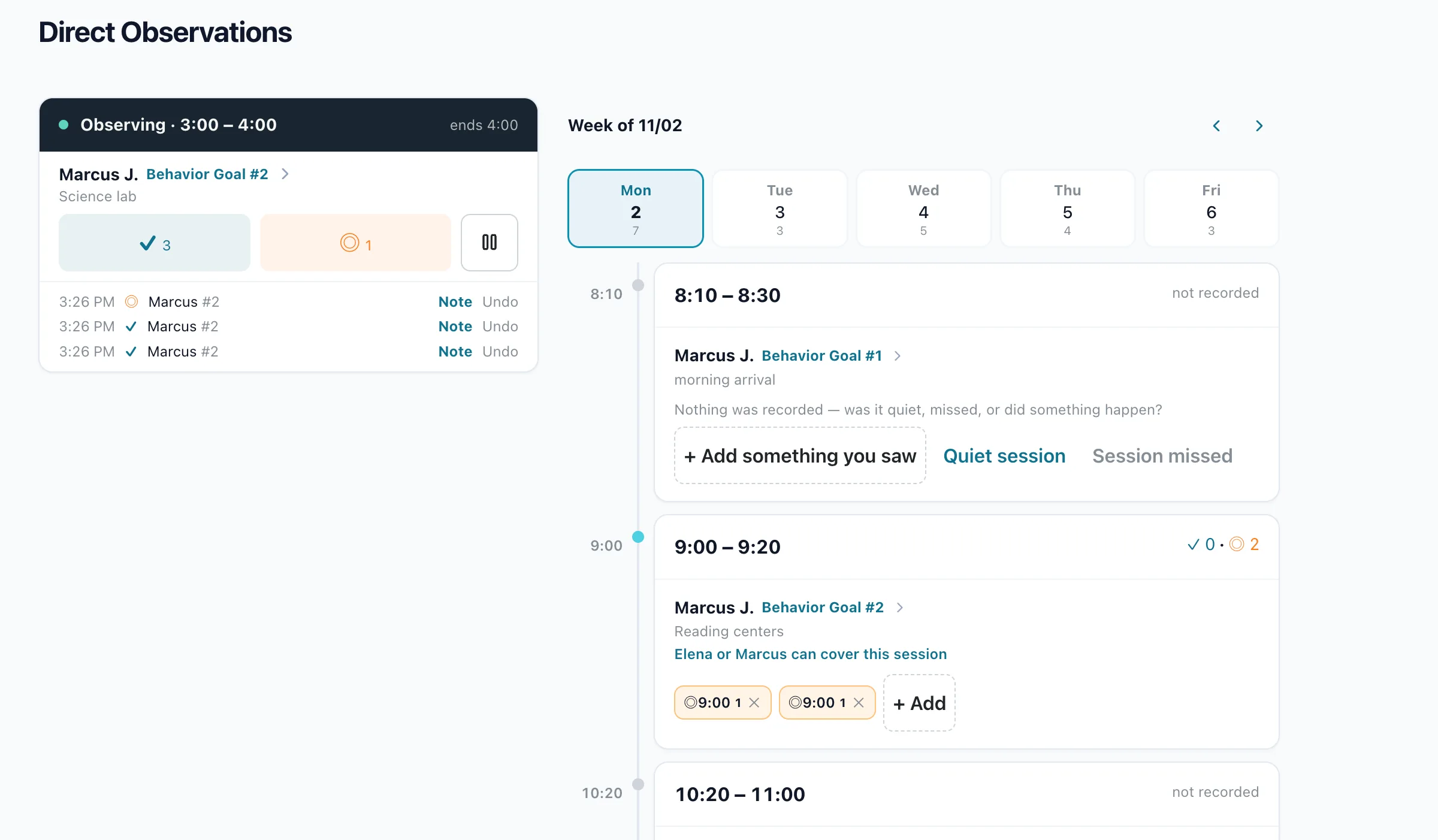
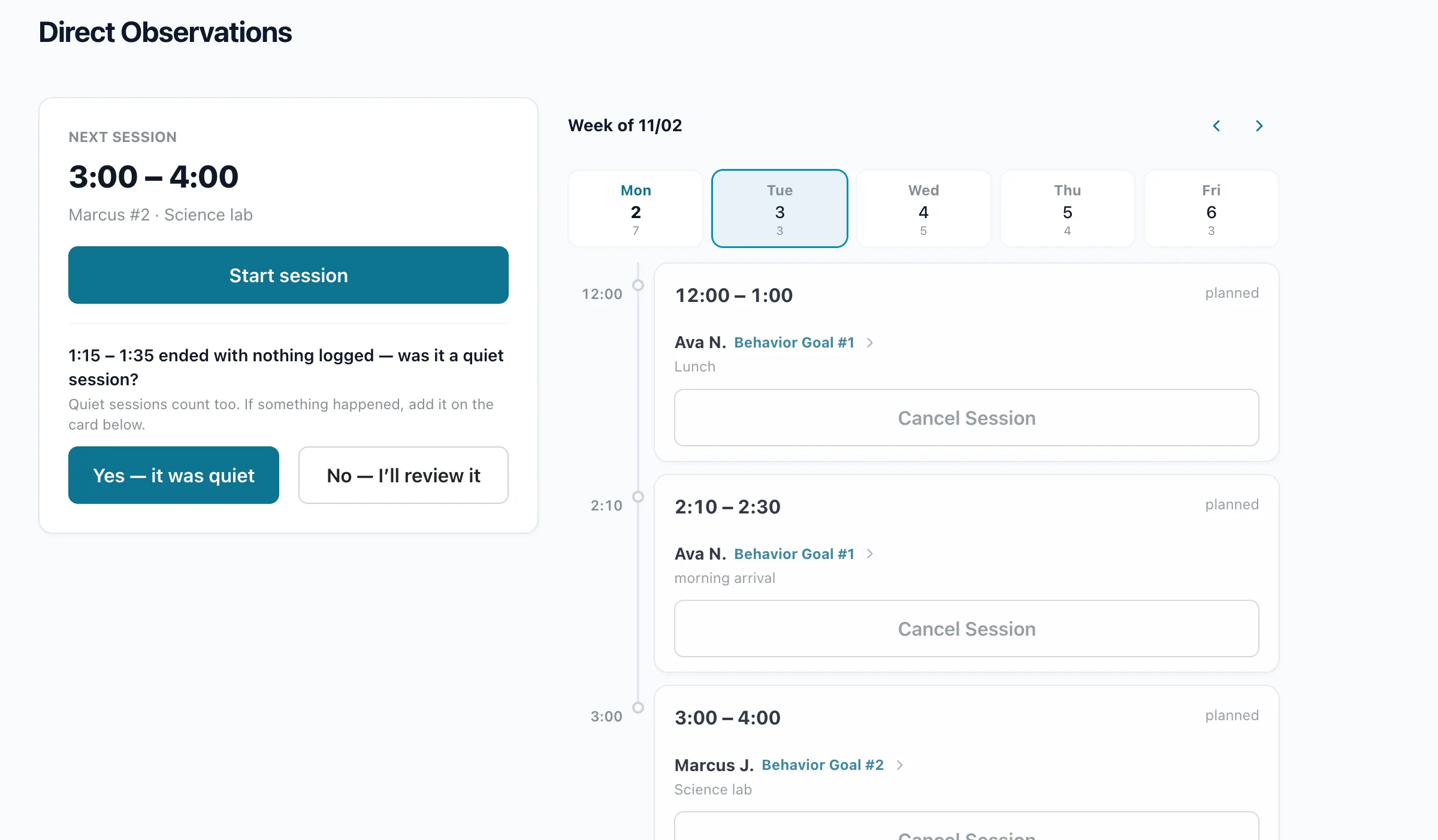
On the calendar
A plan says “observe twice a week in science lab.” BrighterBalance puts those sessions on the calendar, each with one student, one goal and one time, so the observation the plan promised actually happens.
Each session opens with the goal’s target behavior and replacement behavior on screen, so any observer scores the same thing the same way.
Tap to score
The observer taps once for a skill use or a hard moment, adds intensity and prompt level, and keeps watching the student, not a stopwatch.
Every behavior is recorded as a timestamped event. Interval scoring is done for you, with 1, 2 or 5 minute intervals: interval length is a setting.
From the research behind BrighterBalance
Studies comparing recording methods found that whole-interval recording underestimates, and partial-interval recording overestimates, how long a behavior lasts. So observations record every behavior as a timestamped event, and interval views are never presented as estimates of duration.
Source: Murphy & Goodall (1980); Gardenier et al. (2004), as reviewed in The Research Behind BrighterBalance.
Sessions that actually happen
Two different jobs
The facts
Same student record
Every feature reads from and writes to the same student record, so nothing is entered twice.
FAQ
For districts and special education teams
See how BrighterBalance fits your MTSS workflow, your rostering and the platform you already own. Most districts start with a team of five.
Request a demo