Goal Progress
Goal progress that keeps itself up to date.
Every related log and observation counts toward the right goal, so the review meeting starts with data collected all term.
Marcus · Behavior goal
From his BIP
- Target behavior
- Leaving his seat and yelling when asked to switch tasks
- Replacement
- Asks for a break using his break card
- Measured as
- Uses of the replacement behavior out of all related moments
- Target
- A target percent the team sets
A replacement-behavior goal, explained
Fewer hard moments is half the story. The other half is the skill.
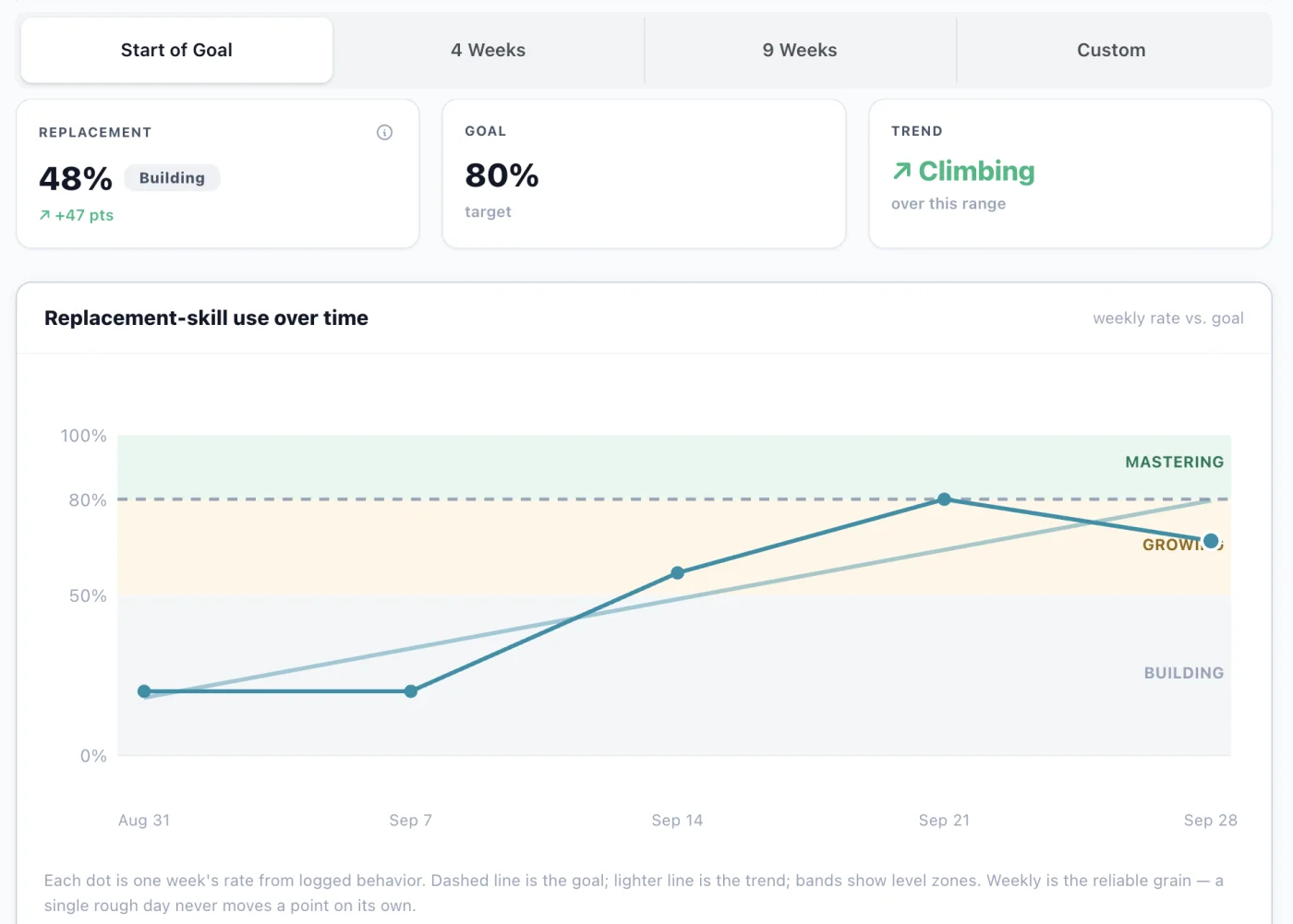
A replacement-behavior goal names what the student will do instead of the target behavior. Progress is the share of related moments where the student used the replacement behavior, measured against the target percent the team set.
Progress is tracked per behavior goal, from the logs and observations related to that goal. A student with three goals has three separate lines of progress.
Progress that moves
Every time a use is logged, the goal moves.
No tally sheets, no end-of-quarter data hunt. The log a teacher already made is the data point.
A moment is logged
“Marcus used his break card in science lab instead of leaving his seat.”It is matched to the goal
The log relates to his replacement-behavior goal, and the reason is shown.Progress updates
The goal’s percent moves toward the target the team set.The team sees where to focus
Goals that stall stand out well before the review date.

Breakdown by setting
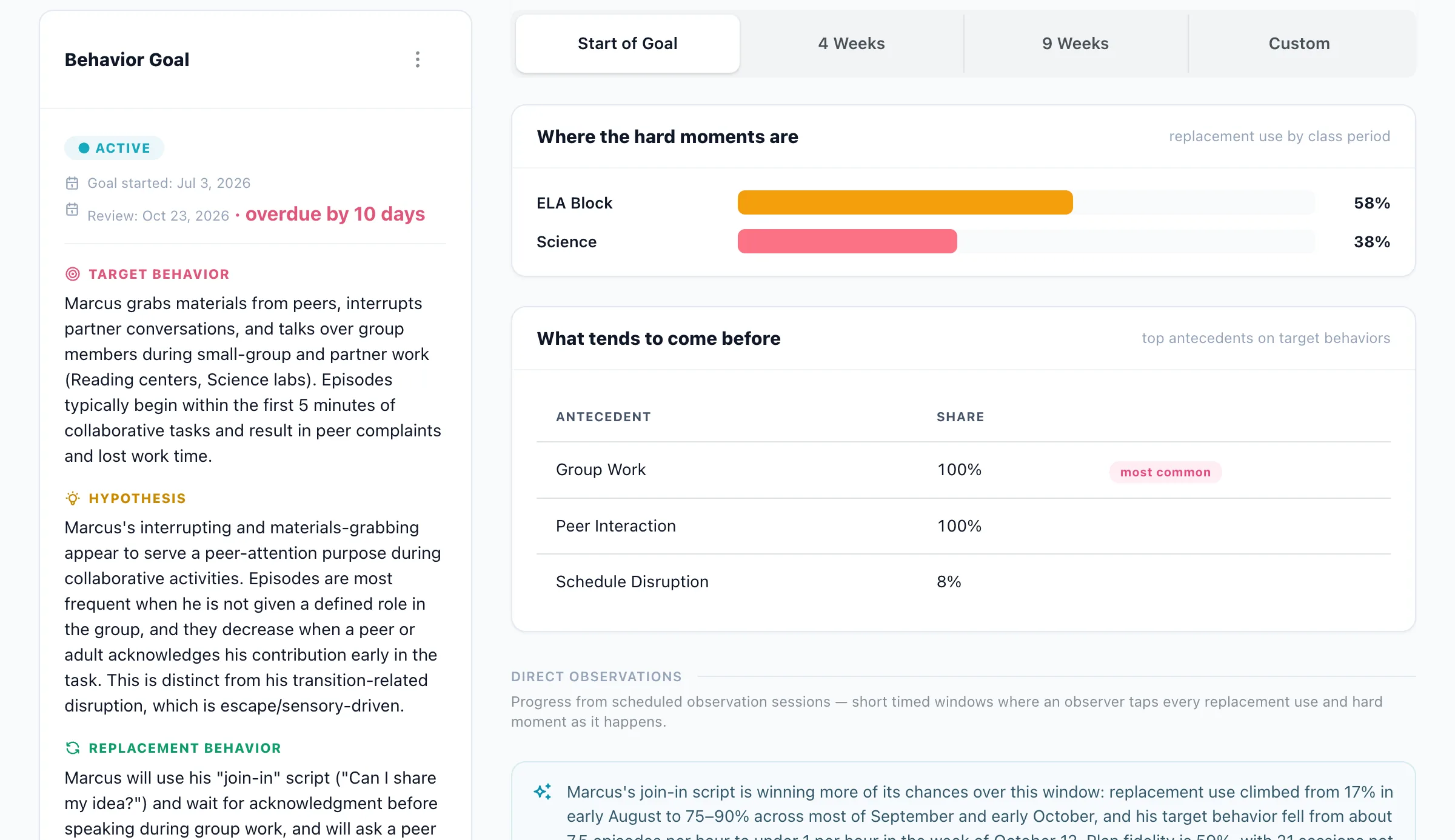
Strong in reading. Still hard in science lab.
The same goal, split by setting and class period. When a skill holds in reading but not in science lab, the team knows exactly where to add support, instead of rewriting a goal that is working most of the day.
- Progress toward the target percent, per goal
- Breakdown by setting and class period
- Settings with no data shown as no data, not as zero
For the review meeting
Behavior Goal reports, powered by Direct Behavior Rating.
When the review date comes, the report is already built from data collected all term.
Direct Behavior Rating
Where to focus
The facts
At a glance
- Who uses it
- Special educators and case managers responsible for IEP and BIP behavior goals.
- What gets tracked
- Each behavior goal on its own: uses of the replacement behavior, the target behavior, and progress toward the target percent.
- Where the data comes from
- The everyday logs and scheduled observations related to that goal, all term long.
- What the team keeps
- The goal, the target and the decision about what to change. The data shows where to focus.
Same student record
Where this connects
Every feature reads from and writes to the same student record, so nothing is entered twice.
Behavior Plans
Direct Observations
Logging Without a Form
Parent & Meeting Reports
FAQ
Questions teams ask
Does every log count toward every goal?
Where do the goals come from?
Do observations count too?
What is a Behavior Goal report?
See the behavior. Understand the student.
For districts and special education teams
Documentation your district can stand behind.
See how BrighterBalance fits your MTSS workflow, your rostering and the platform you already own. Most districts start with a team of five.
Request a demoFor teachers
You capture the moment. We handle the paperwork.
The Teacher Plan includes logging without a form, the Advisor, goal progress and points & rewards.
Start with a 30-day free trial.
Start Free