All plans
Points & Rewards
Spark, Glow, Blaze. Points only ever go up.
See Points & Rewards: Points & Rewards

Check-In/Check-Out
Students carry the same paper card they always have. At check-out, the Mentor snaps a photo, and the scores are recorded and graphed with no data entry.
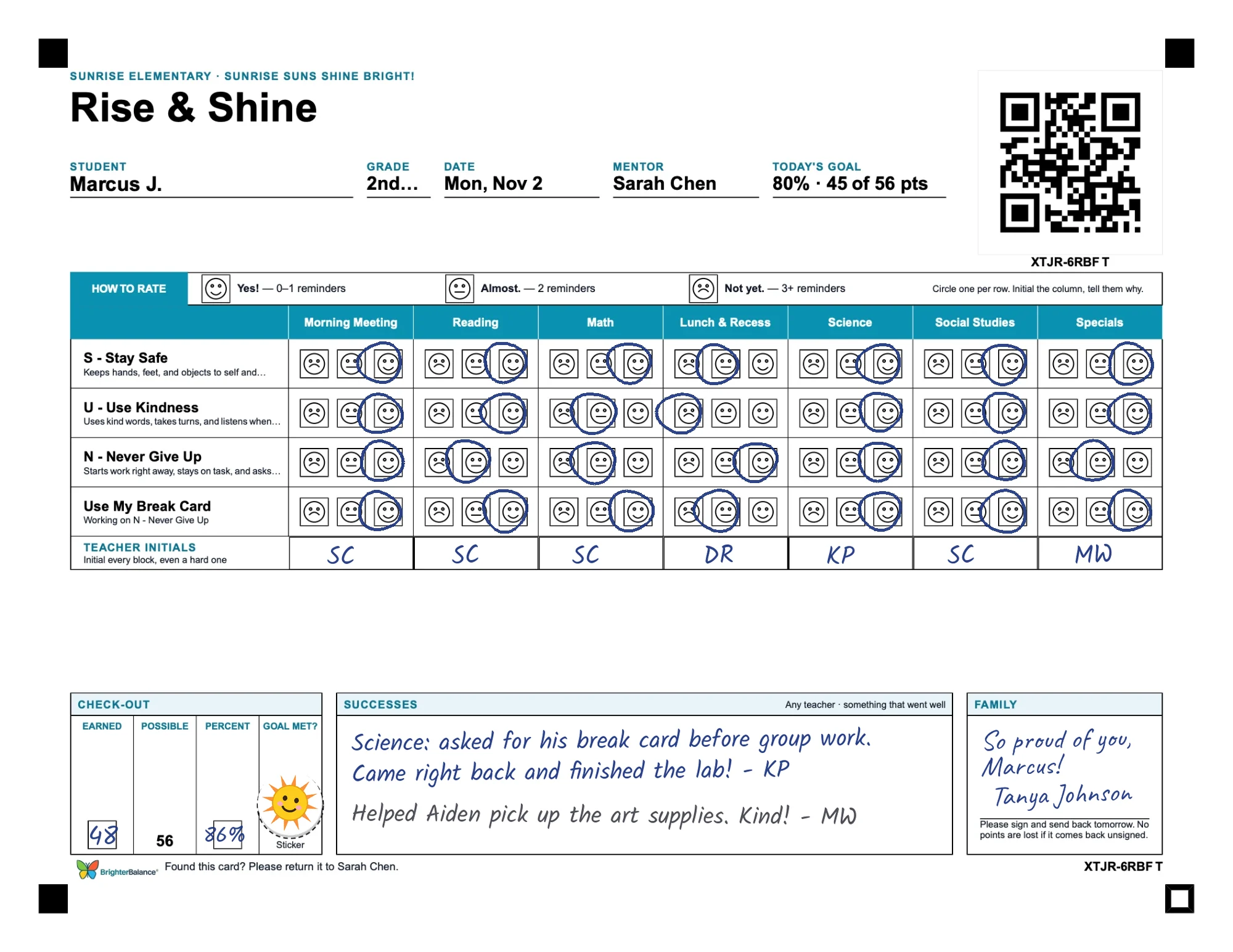
Check-In/Check-Out is a Tier 2 support: a student checks in with a Mentor each morning, carries a card that teachers score through the day, and checks out with the Mentor in the afternoon. The daily scores show whether the support is working.
The usual headaches
With BrighterBalance the school keeps its paper card, and the folder goes away.
Snap it and it is charted
The school keeps its paper card. The Mentor snaps a photo at check-out and the scores are recorded and graphed with no data entry.
The whole program
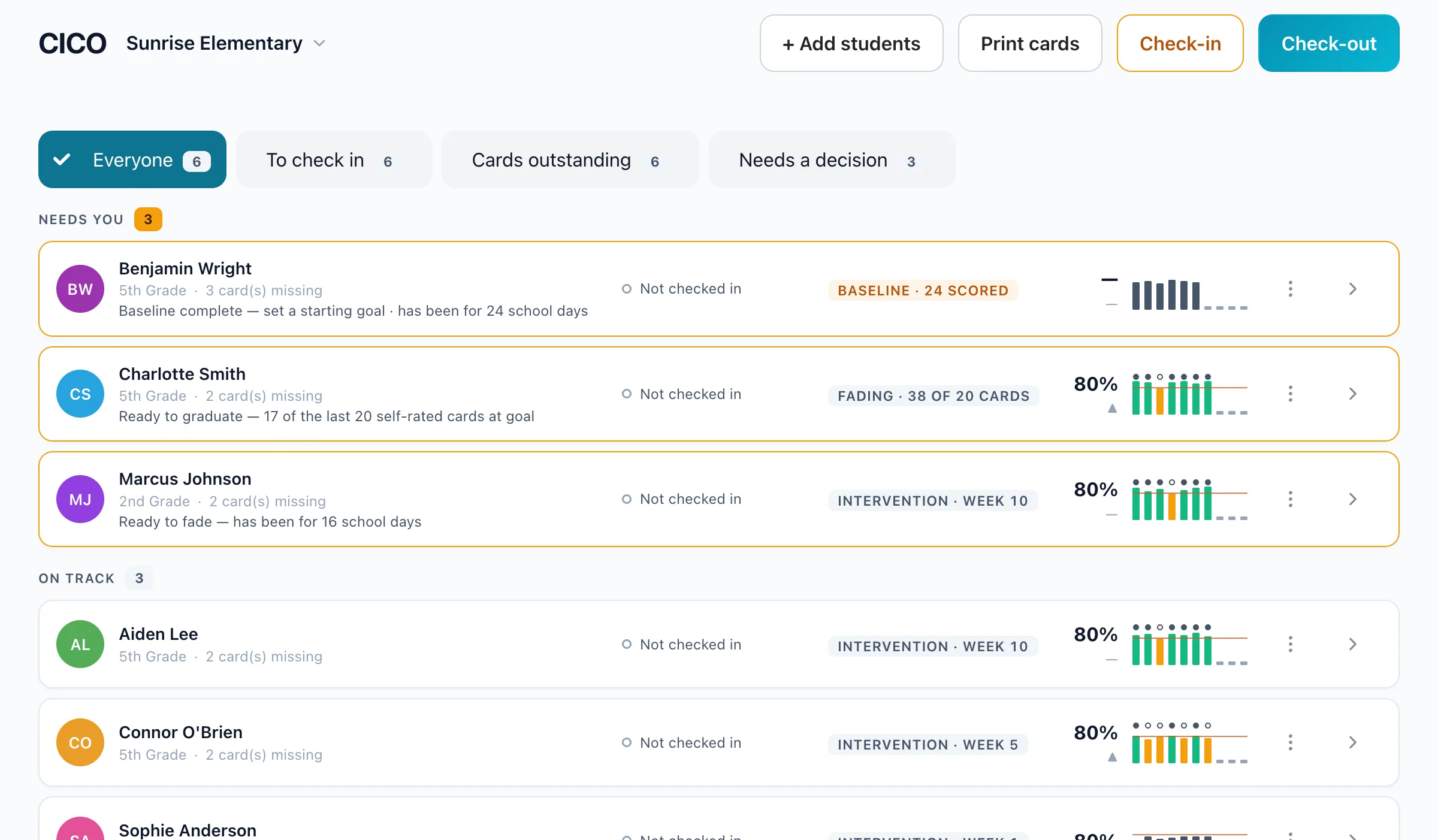
See every student in the program and their phase, from baseline to fading, in one list. The Tier 2 coordinator sees who is moving forward and who needs a change, without opening a single folder.
One student at a glance
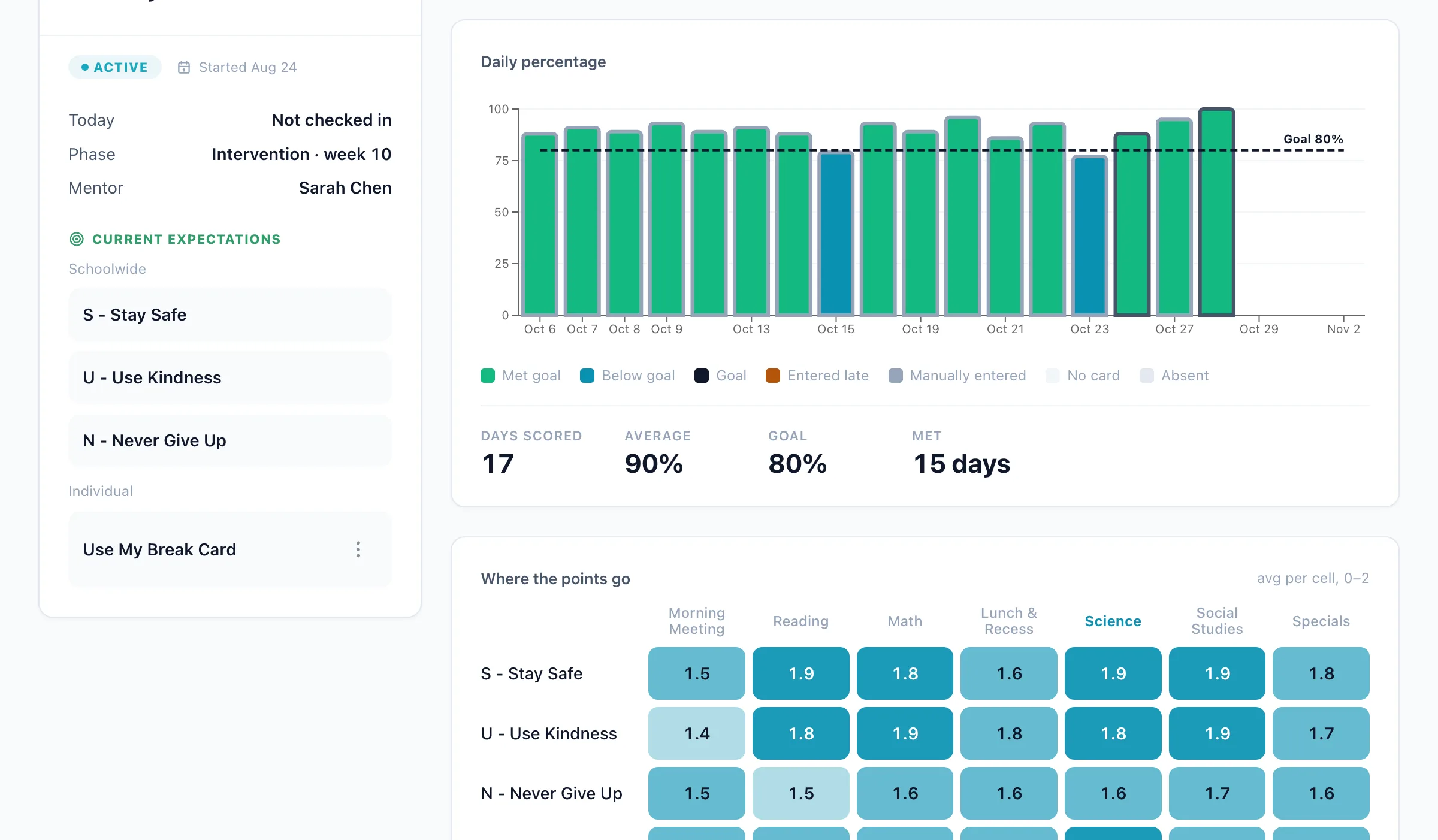
Each snapped card becomes a dated point on the student’s chart: the day’s score, whether it was a goal day, and the phase they were in. The Mentor can see the week before the student even sits down for check-out.
Before a referral
When a student needs more than Tier 2, the team has every day of the support on record: what was tried, for how long, and how the student responded.
Every card, dated, with the photo it came from, ready for the SPED referral conversation.
From Tier 2 CICO through to an IEP, the same student record carries the whole story.
From the research behind BrighterBalance
In a study of an online daily report card, 12 of the 20 teachers who implemented it still tracked behavior on paper and entered it later. So BrighterBalance keeps the card teachers already use. The team’s review is set in weeks, because when CICO works, improvement has been shown to appear within the first week.
Source: Owens et al. (2022); Paananen et al. (2025), as reviewed in The Research Behind BrighterBalance.
The facts
Same student record
Every feature reads from and writes to the same student record, so nothing is entered twice.
FAQ
For districts and special education teams
See how BrighterBalance fits your MTSS workflow, your rostering and the platform you already own. Most districts start with a team of five.
Request a demo