Team & Organization
Check-In/Check-Out
Tier 2 data from the paper card, recorded and graphed at check-out.
See Check-In/Check-Out: Check-In/Check-Out

SPED referral evidence
What the team tried, for how long, and how the student responded, documented as it happened and ready before a referral.
Before a referral
When a team considers a referral, the conversation turns to the record. Too often, the record is scattered.
What did we actually try before we referred him, and for how long?
The intervention notes are in four places, and two of them are in someone’s head.
Did he respond to Tier 2, or did we just stop writing it down?
If a family asks why it took this long, what does our record show?
Our state has its own rules. Are we documenting the way they expect?
Child Find
Under IDEA’s Child Find requirement, districts must identify, locate and evaluate students who may have a disability and need special education. When a team considers a referral, the questions turn to what was tried, for how long, and how the student responded.
BrighterBalance keeps that record as it happens: dated, in the words of the adults who were there, with Tier 2 data such as Check-In/Check-Out alongside every adult’s logs.
This page describes how BrighterBalance documents interventions. It is not legal advice. Your district’s special education leadership and counsel decide what your process requires.
How the record builds
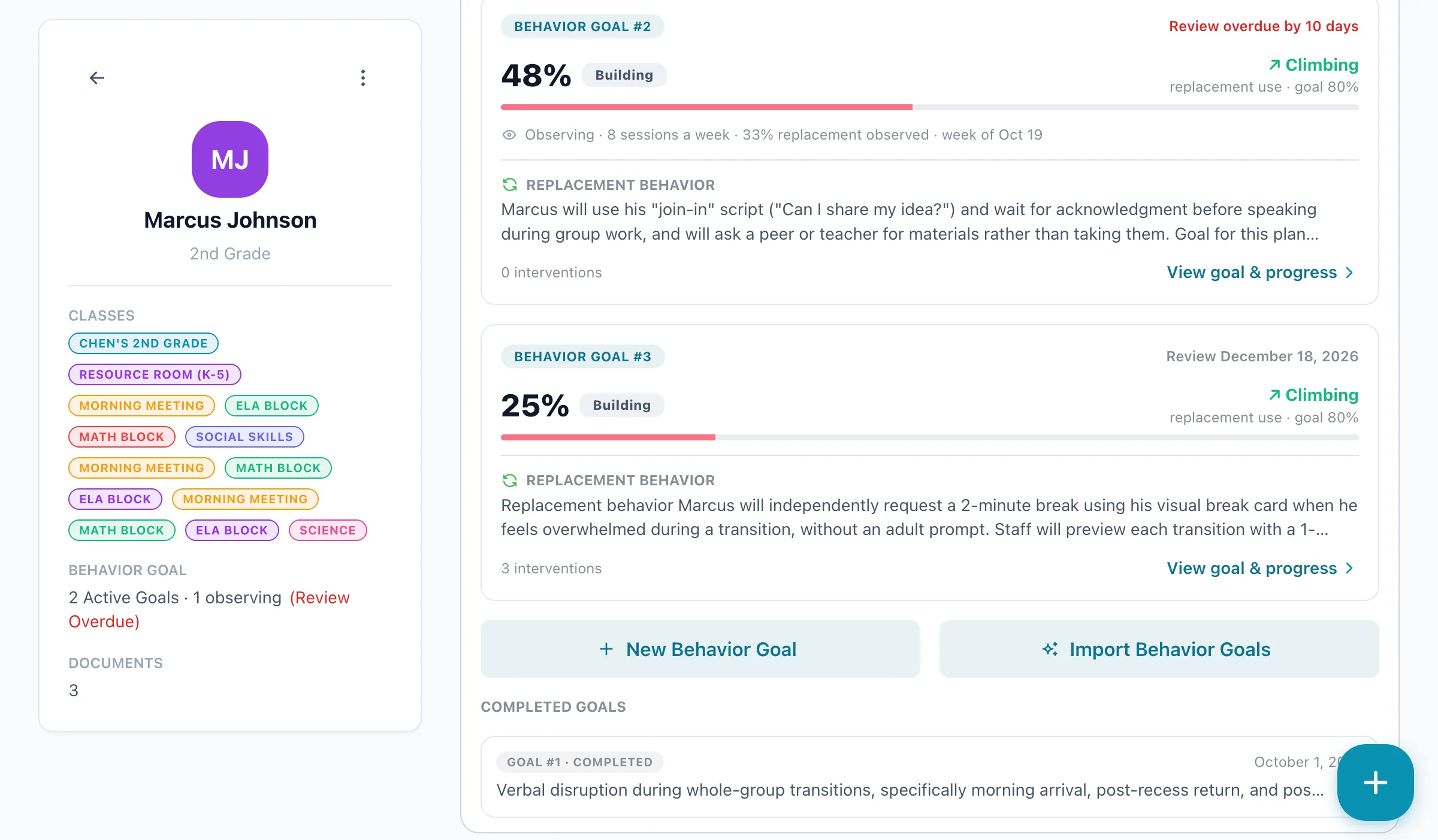
Marcus is a student whose team is weighing a referral. (A fictional example from our demo account.)
The first concern
Tier 2 begins
When the plan calls for it
Week after week
Before a referral
The outcome
Before: Intervention history pieced together from email and memory.
With BrighterBalance: What the team tried, for how long, and how the student responded, documented as it happened.
Before: Tier 2 data on paper cards in a folder.
With BrighterBalance: CICO scores recorded and graphed from a photo of the card.
Before: Notes that say “bad week.”
With BrighterBalance: Dated, objective entries with what happened before and after.
Before: Scrambling when a family or advocate asks.
With BrighterBalance: A dated record, ready before a referral.
Features used
Each one has its own page with the screens.
For districts and special education teams
See how BrighterBalance fits your MTSS workflow, your rostering and the platform you already own. Most districts start with a team of five.
Request a demo